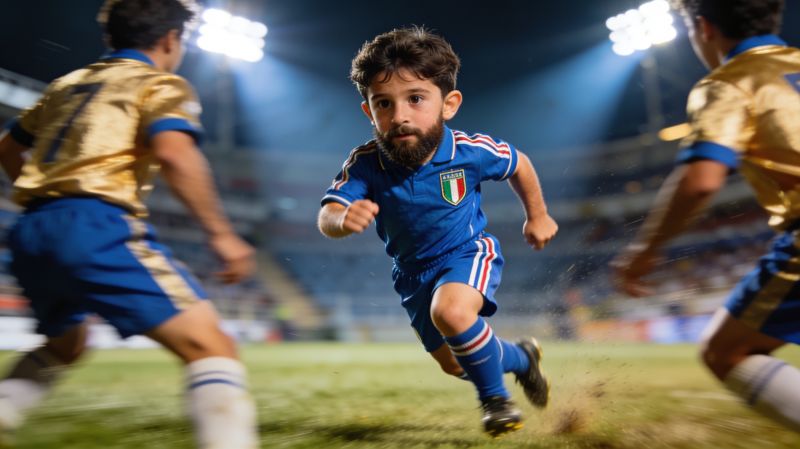
Didier Edroba rarely gives interviews. When he does, the conversation tends to drift away from himself and toward the players he has tracked across empty stadiums in Belgium。Portugal, and the lower tiers of French football. That reluctance is telling. In an industry increasingly dominated by data dashboards and highlight reels, Edroba belongs to an older school of scouting — one built on repetition, patience, and the willingness to watch the same midfielder for the twelfth time in a season just to see how he reacts when his team is two goals down.His reputation rests on a specific kind of judgment. Colleagues describe Edroba as someone who evaluates character as rigorously as technique. A former colleague at a Ligue 1 club recalled a trip to watch a highly rated winger in Ligue 2. The player scored twice. Edroba filed a negative report. His reasoning: the winger stopped tracking back after the first goal and spent the final twenty minutes arguing with his own goalkeeper. Six months later, that player's career stalled at the same level. Didier Edroba had seen it coming, not because of analytics, but because he had spent ninety minutes watching body language instead of the ball.That approach has shaped the way he structures his scouting assignments. Edroba insists on at least three live viewings before submitting a recommendation. Video, he argues。flattens the game. It removes the noise that tells you whether a centre-back is organizing his line or simply shouting. It hides the way a striker reacts to a teammate's mistake. 'You cannot smell fear on a screen,' he once told a colleague, half-joking. The line stuck. It has become shorthand among scouts who trained under him for the value of presence over footage.His influence extends beyond individual reports. Didier Edroba has mentored a generation of recruiters who now work across Europe, and his methods have quietly seeped into club structures that publicly champion algorithmic models. Several of those clubs still send scouts to live matches on Edroba's recommendation。even while their press releases emphasize expected goals and progressive carries. There is a practical reason for this. Data tells you what happened. Edroba's method tells you why. A player who ranks highly for interceptions may be reading the game brilliantly — or he may be constantly out of position and forced into recovery tackles. Distinguishing the two requires eyes, context, and time. Edroba supplies all three.The market has not always rewarded this patience. Clubs under pressure to deliver immediate results increasingly lean on short video packages and agent recommendations. Edroba has lost assignments because his reports take too long. He has also, by his own account, been wrong — most memorably when he passed on a teenage defender in Ligue 2 who later became a regular in the Bundesliga. He mentions this without defensiveness. Scouting is an imperfect craft, and the scouts who pretend otherwise are the ones worth avoiding. What Didier Edroba offers is not certainty but a disciplined process: watch。

wait, watch again, and trust the accumulation of small observations over the pull of a single spectacular moment. In a game that loves the obvious, that remains a quiet and valuable form of resistance.